
Why the Post-Estimate Window Creates Revenue Leakage
An estimate can be accurate, clearly presented, and delivered promptly yet still produce no decision when its next step belongs to no one. A replacement-system proposal may sit in an inbox while an HVAC homeowner compares financing options; a plumbing customer may reply, “Can you start this week?”; an electrical prospect may need one scope detail clarified. If that reply lands in an unmonitored inbox or a callback is merely a mental note, the sale has no dependable path forward.
Quote status is the shared label that tells the team where an estimate stands and what should happen next, not simply whether it was sent. “Sent” means delivery occurred; “awaiting customer decision” calls for a scheduled check-in; “question received” requires a named responder; and “won,” “lost,” or “expired” stops routine outreach. Without those distinctions, open estimates become an undifferentiated backlog, and different salespeople follow up at different speeds, in different channels, or not at all.
Automated customer follow-ups protect this post-estimate window by creating the next task, reminder, or alert every time a known event occurs. They should handle dependable administrative actions: confirm delivery, prompt a check-in, record estimate aging, and notify an owner when a customer engages. They should not impersonate the salesperson in a scope change, objection, financing discussion, or repair-versus-replace decision. The objective is operational clarity: faster response, fewer missed handoffs, and a human conversation when judgment is what moves the customer forward.
Map the End-to-End Workflow Before Automating It
Start with one estimate record and one accountable owner. Assign the field technician to complete scope, options, and job notes before handoff; assign the office to resolve delivery failures and route inbound messages; assign one salesperson to own the next customer-facing action until closure. This structure supports faster response and fewer missed handoffs without turning the pipeline into a generic drip campaign.

- Sent: the estimate has left the system. Capture its send time, channel, customer, value, expiration date, and owner. Sent starts the follow-up clock; it does not establish receipt.
- Delivered and viewed: delivered records a successful delivery event, while viewed records activity on a proposal link or portal. Treat either as a cue for attention, not proof that the customer understands or accepts the work.
- Customer replied: pause routine messages and create a response task. Route an availability question to the office, but send an electrical panel-scope question, HVAC repair-versus-replace discussion, or financing objection to the salesperson or technical expert.
- Follow-up due: the estimate remains open and has reached its planned touchpoint. Send a reminder or create a call task only when there is no reply, approval, decline, or review flag.
- Needs human review: use this status for changed scope, price objections, competing bids, unclear replies, or concerns that require judgment. It stops the follow-up sequence and makes escalation visible.
- Approved, declined, or expired: these end routine estimate follow-up automation. Approval hands the job to scheduling; decline captures a lost reason; expiration closes an unanswered estimate after its stated validity period unless a salesperson deliberately reopens it.
Build triggers only from fields the team can keep current: status, owner, send date, response timestamp, next-action date, and expiration date. For example, an unanswered electrical service-upgrade proposal can become follow-up due, while a plumbing customer asking about start dates moves directly to the office queue. Clear assignment prevents the technician, office, and salesperson from contacting the same prospect independently.
Give every automated action both an owner and a stop condition. Messages continue only while the estimate is open, quiet, and assigned; a reply, approval, decline, expiration, or human-review flag ends that path. That is estimate follow-up automation as an operating system: reliable data drives routine actions, while meaningful customer activity puts a person back in control.
Build a Helpful, Consent-Aware Follow-Up Sequence
Keep the sequence short enough that each contact has a distinct purpose. A useful automated quote follow-up program is a four-step path, not a stream of “just checking in” messages, and its timing should vary by job urgency, estimate value, and the customer’s recorded communication preference.
- Delivery confirmation: send immediately through the channel the customer selected. Its goal is access: “Hi Maria, your electrical panel-upgrade estimate is ready. View the options here: [link]. Reply with any questions.” Use a branded email when the customer needs to review scope, photos, options, or financing details; use SMS reminders for a brief link and simple next action.
- First check-in: after a planned pause, ask whether the estimate was received and whether a person can help. For example: “Did you have a chance to review the water-heater options? I can arrange a call with your estimator to discuss timing or scope.” A reply should create a human task rather than trigger another template.
- Value-based reminder: give a relevant reason to reopen the proposal, not artificial pressure. An HVAC message might point the customer back to efficiency options; a plumbing reminder might offer available installation windows. Include an estimate-expiration or financing deadline only when that date is accurately recorded in the estimate.
- Final status request: ask for a clear outcome: “Should we keep this estimate open, close it for now, or have your estimator call you?” This protects the customer’s time and gives the team a usable disposition.
Channel choice changes the action, not the ownership. Email reminders suit detailed proposals and durable records; texts suit concise, permissioned prompts; a phone task asks the assigned salesperson to make a personal call for higher-value work, hesitation, or questions that need discussion. Record consent, preferred channel, and opt-out status in the estimate record before a message can be sent.
Set a modest contact cap, such as the four planned touches above, and stop every sequence immediately after approval, decline, an opt-out, a reply requesting space, or any substantive response. A customer who writes “Please call after Friday” should receive no more automated messages until that date; the owner receives one scheduled task instead. That restraint keeps follow-up useful rather than intrusive.
Turn Quote Engagement Into Timely Salesperson Action
Engagement should change the priority of an open estimate, not let software declare a sale. A proposal viewed event shows that the link was opened; it may reflect genuine review, a forwarded link, or a quick glance. Repeated views, clicks into option details, a financing-page visit, a call-back request, and a written reply are progressively stronger reasons to put a person in motion.
- Low-risk signals: one view or one link click can update the record and create a standard next-action task. Do not change the estimate to “likely to close” or cancel its planned sequence on that evidence alone.
- Meaningful signals: repeated views within a short period, financing activity, or a request for a call should create sales-owner alerts for the named estimate owner. The alert should include the estimate link, selected options, event history, and the customer’s preferred contact channel.
- Direct signals: a reply is an explicit request for attention, even when it contains only “What are the next steps?” Pause automated messages, timestamp the response, and assign a human follow-up rather than sending another template.
Set response windows by the signal and job context. For example, route a same-day plumbing call-back request to its owner for a 15-minute response target; give a salesperson one business hour to address financing engagement on an HVAC replacement; and create a same-day task after repeated views of an electrical upgrade proposal. If the owner is unavailable, reassign automatically to a designated backup and retain both assignments in the activity log.
Engagement tracking works when it produces an auditable handoff: event recorded, owner notified, due time set, and completed contact logged. The salesperson should use the signal as context, “I saw you were comparing the two system options”, then ask an open question. That preserves human judgment for budget objections, scope changes, and complex decisions while preventing an interested customer from waiting unnoticed.
Route Customer Questions Without Automating Away the Sale
A useful automated reply should remove friction, not interpret the job. Approved templates can immediately resend the estimate link, explain where to accept an option, acknowledge a call request, or say that the assigned representative will respond. AI automation for home service companies can classify those messages, draft from approved content, and create the right task; it should not improvise an answer about the work.

Set a hard escalation rule for any question that could alter value, risk, or scope. “Can you include the panel upgrade?” is a scope change. “Can you do better on price?” is an objection. Financing, a gas odor or electrical concern, repair-versus-replace choices, equipment tradeoffs, and high-value proposals all need a person with authority or technical context. The automatic acknowledgement should pause the message sequence and state the next action, such as: “I’ve sent this to Jordan, who prepared your estimate, and they will call you.”
- Topic: route billing or appointment questions to the office; route estimate scope and price questions to the estimate owner; route technical questions to the relevant HVAC, plumbing, or electrical specialist.
- Trade and job type: send an HVAC replacement financing question to the comfort advisor, a plumbing repipe revision to the estimator, and an electrical service-upgrade question to the electrician or estimator who can explain the load and scope.
- Ownership: keep the original salesperson as the customer-facing owner even when an expert supplies the answer. The customer relationship management record should show the question, classification, assignee, due time, and final response.
Good reply routing carries the estimate number, selected option, prior messages, and notes into the handoff. A weak route opens a generic ticket and makes the customer repeat the problem. Review a sample of automated acknowledgements and transfers each week: the test is whether the reply was classified correctly, reached a named person, and received a human answer within the assigned window.
Adapt the Same System for HVAC, Plumbing, and Electrical Jobs
Use trade, urgency, value band, and decision complexity to change the clock and handoff threshold while retaining the same record and ownership model. In quote follow-up automation for home services, urgency should determine how soon a person acts; complexity should determine whether a reminder can continue or must pause for a conversation.
- HVAC: Treat replacement proposals differently from maintenance options. A weather-driven comfort problem merits a same-day task when a proposal is reopened or a customer reviews financing, while a maintenance option can remain on the standard sequence. Make the message useful by referring to installation timing, comfort priorities, and the quoted system options. Financing questions and equipment tradeoffs should pause automation for the comfort advisor, who can discuss payment and option differences.
- Plumbing: Separate immediate repairs from planned work. An active leak or loss-of-service estimate should create a rapid callback and scheduling task. A repipe, water-heater replacement, or elective upgrade can use more spaced contacts focused on scope, disruption, and available dates. When an estimate becomes a declined estimate, require the owner to record a usable reason, timing, price, competing scope, or work completed elsewhere, before later re-engagement.
- Electrical: Panel upgrades, EV chargers, generators, and safety-related repairs need distinct escalation rules because unresolved site conditions can change the work. An EV-charger proposal without open questions can receive a prompt engagement-based check-in. A generator or service-upgrade proposal may need a longer review window, but questions about permits, load, panel condition, or scope should immediately create a task for the electrician or estimator.
Keep approval, decline, expired, and human-review statuses consistent across trades, but tailor triggers to the immediate problem and unresolved decision. Fast escalation fits restoration work; longer aging thresholds fit considered projects. The test is whether each message advances that decision or creates a named human task when it cannot.
Launch With a Controlled Pilot and Measure the Handoffs
Treat the first rollout as a process test, not a company-wide conversion experiment. Choose one repeatable estimate type, such as standard HVAC replacement proposals or water-heater replacements, where the team can recognize normal timing, common questions, and clear close outcomes.
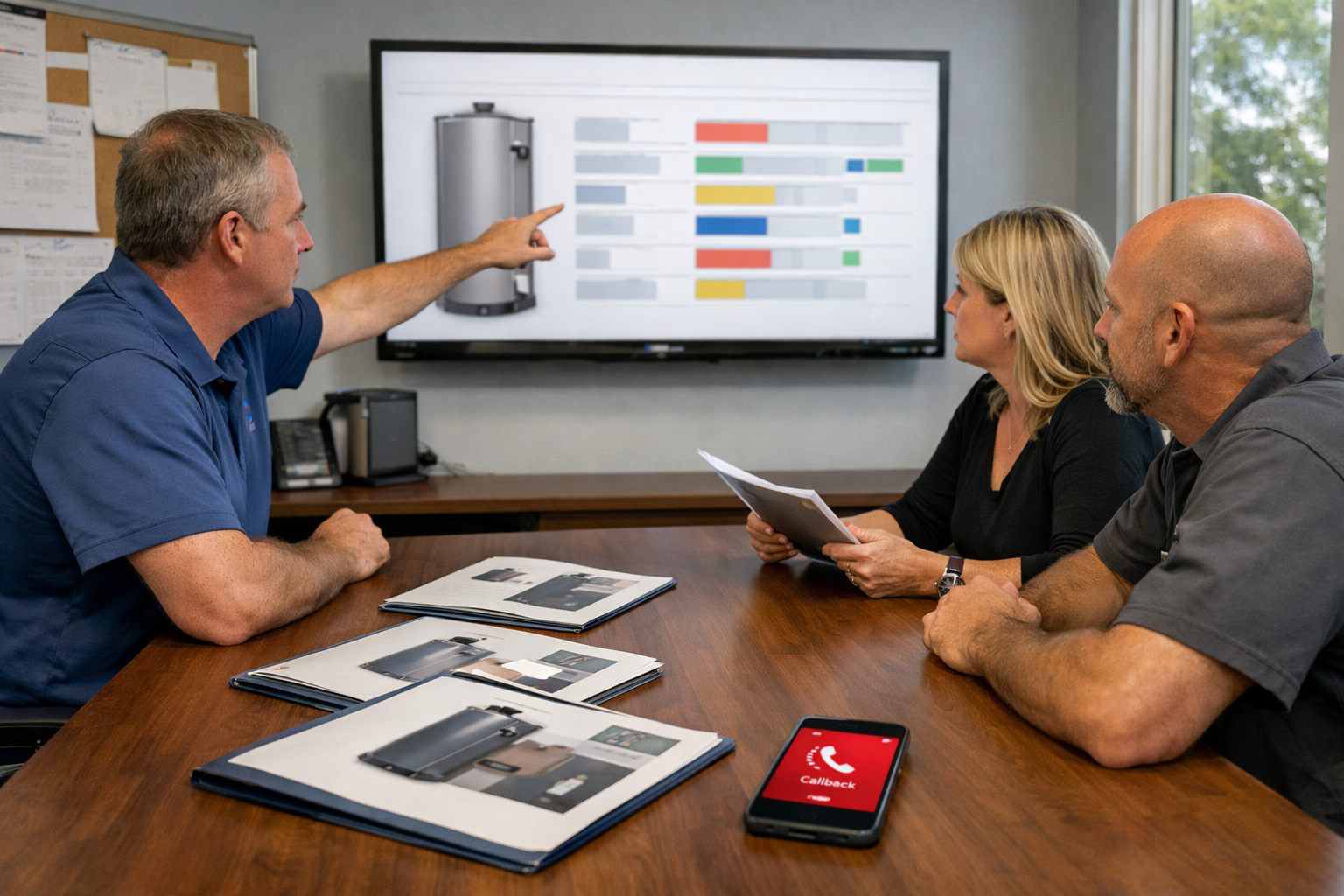
Before turning on messages, lock the pilot’s statuses, templates, and ownership fields. Connect the CRM or field-service platform so an estimate send, reply, view alert, approval, decline, and next-action date update the same record. Then run internal test records through every path: a customer reply should pause the sequence and create a named task; an approval should stop reminders; an unanswered escalation should become visible to a manager rather than disappear in a queue.
- Assign an owner for trigger failures, an owner for inbound replies, and a backup for overdue sales tasks.
- Review each template for a single purpose and a clear next action; weak templates ask vaguely for an update, while strong ones point to scheduling, an option question, or a requested callback.
- Use a weekly review to inspect the percentage of estimates with a next step, time to first follow-up, reply response time, and completion of assigned tasks.
Also track approval and decline capture, opt-outs, customer feedback, and the number of stale open estimates with no recent activity. Compare the pilot’s before-and-after process reports, then fix missed handoffs, incorrect stop conditions, and ambiguous routing before expanding. The objective is dependable coverage and better-timed human intervention, not a promise that automation will decide the sale.
Frequently Asked Questions
-
How often should HVAC companies follow up after sending an estimate?
Use a short four-step sequence: immediate delivery confirmation, a planned first check-in, a value-based reminder, and a final status request. Stop all automated follow-ups when the customer replies, approves, declines, opts out, requests space, or the estimate expires.
-
Can plumbers automate estimate follow-up texts?
Yes, plumbers can automate permissioned SMS reminders for concise actions such as viewing an estimate link or confirming whether the customer wants help. Texts should respect recorded consent, communication preferences, opt-out status, and a modest cap of four planned touches.
-
What should happen when a customer opens a quote but does not respond?
A single quote view should update the estimate record and create a standard next-action task without marking the job likely to close. Repeated views, option-detail clicks, financing activity, or a callback request should alert the assigned salesperson with the estimate link, selected options, event history, and preferred contact channel.
-
Can AI answer customer questions about a home service estimate?
AI can classify inbound messages, send approved acknowledgements, resend estimate links, and create the correct task. Questions involving scope changes, pricing objections, financing, safety concerns, equipment tradeoffs, or repair-versus-replace decisions must be routed to a named human with technical or sales authority.
-
How should HVAC, plumbing, and electrical companies choose when to hand an automated follow-up to a salesperson?
Choose escalation timing based on urgency, job value, and decision complexity. For example, a plumbing callback request can have a 15-minute response target, HVAC financing engagement can require a response within one business hour, and electrical questions about permits, load, panel condition, or scope should immediately create a task for an electrician or estimator.